Today marks 10 years since the publication of our CEO/Co-Founder Dr Lowellyne James’s doctoral dissertation on how Scottish SMEs perceive, adopt, and struggle with sustainability footprint methodology. In that work, he coined “carbon myopia”: the tendency to treat carbon footprint measurement as the whole of sustainability, rather than one indicator within a wider system of environmental, social, and economic performance.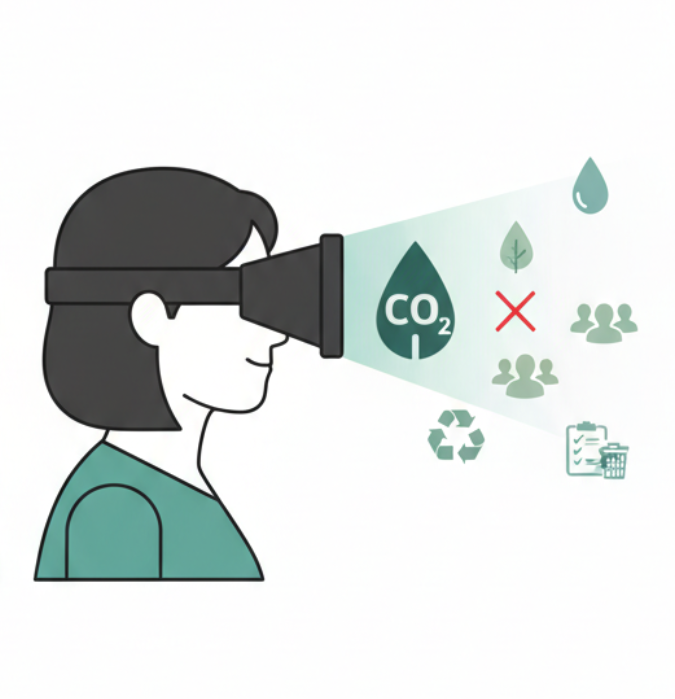
In Sustainability Footprints in SMEs (John Wiley & Sons), Dr James expanded the idea, to include the state of being carbon myopic describing how leaders, strategists, and policymakers can become stuck—ranging from unawareness to a false split between sustainability as a qualitative philosophy and measurement as a quantitative exercise. Related thinking also appears in earlier policy commentary on avoiding carbon-only approaches, and the years since have produced parallel terms such as ecological or managerial myopia.
Carbon matters—it is a major climate vector and a threat multiplier—but a disproportionate focus can create governance blind spots: social and economic impacts fade, trade-offs stay hidden, and reporting maturity outpaces operational maturity. The result is a programme that can describe a footprint, yet struggles to demonstrate SDG-linked performance.
ISO 53001 offers a practical remedy by requiring an auditable SDG management system—scope, leadership, planning, operational control, monitoring, internal audit, and continual improvement—supported by tools like SDG Assessment to make evidence and assurance a by-product of day-to-day management.